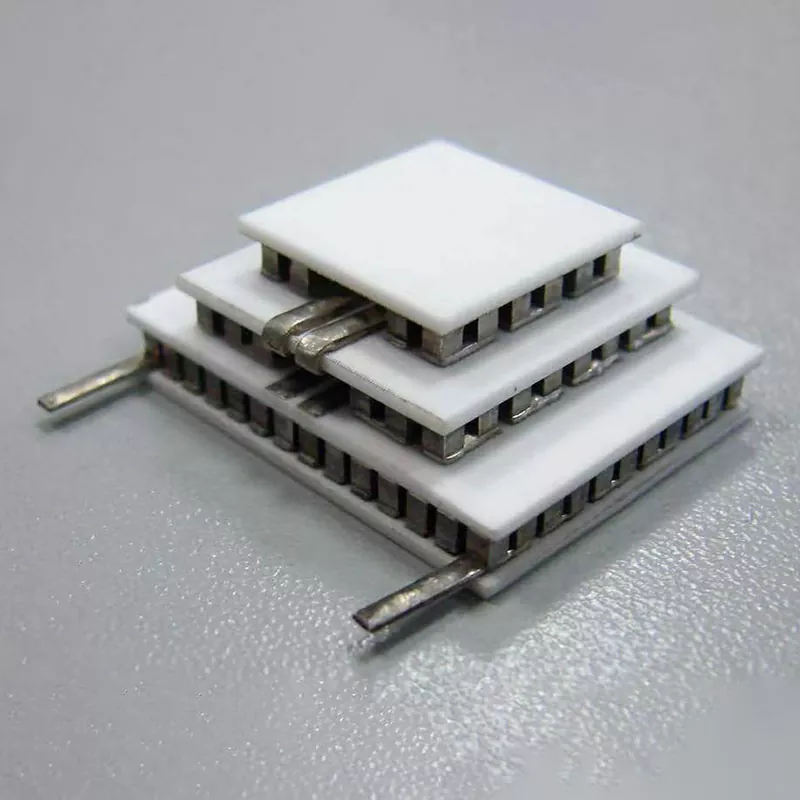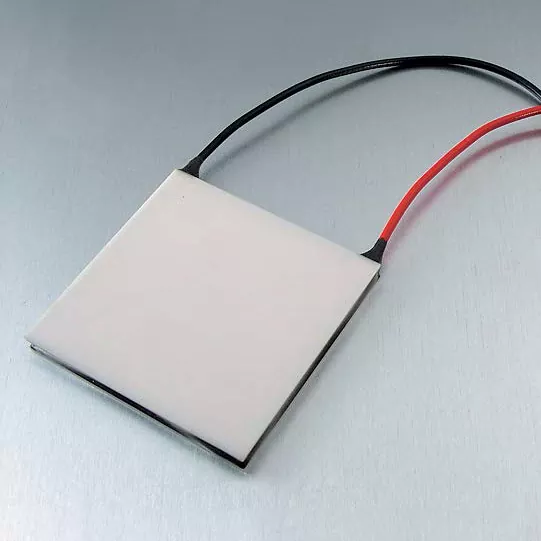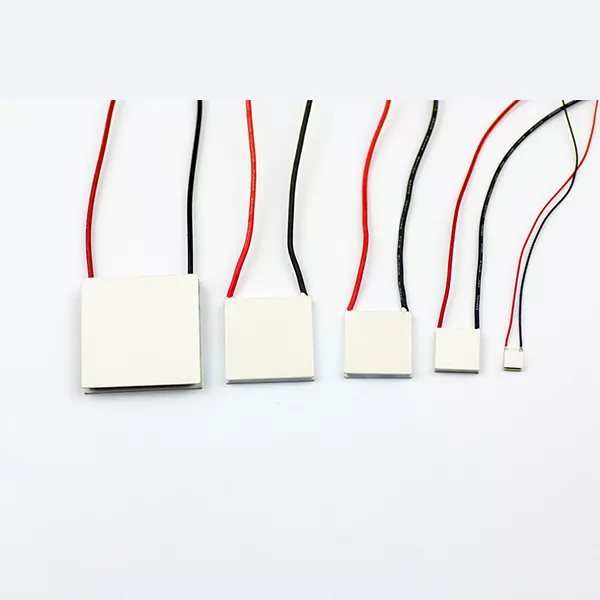
X-Meritan is a professional China quality General TE Coolers with Serial or Parallel for Special App manufacturer. The Series-Parallel General TE Coolers are the flexible temperature control solutions developed by X-Meritan based on seasoned experience in thermoelectric technology. They aim to meet complex industrial cooling requirements through flexible multi-module configurations. As a global leading expert in thermoelectricity, we use our unique dedicated testing equipment to conduct precise inspections on eyery General TE Coolers with Serial or Parallel for Special App, ensuring a perfect balance between durability, economy, and delivery speed. This guarantees the most reliable underlying thermal management support for your special application scenarios.
X-Meritan specializes high efficient General TE Coolers with Serial or Parallel for Special App. Series-parallel TEC Modules can precisely address heat dissipation challenges ranging from micro laboratory equipment to large industrial machinery through the arrangement of fluid and circuit in series or parallel. As a leading manufacturer of series-parallel general-purpose thermoelectric coolers, X-Meritan not only provides standardized series-parallel thermocouple modules, but also has a deep understanding of how to enhance system efficiency by optimizing flow resistance and heat transfer coefficients. For highly demanding operating conditions, our specially designed Special thermoelectric coolers with a mixed serial-parallel connection can effectively resolve the contradiction between pressure drop and energy consumption in large flow systems, helping customers achieve a smooth transition from prototype development to large-scale production.
In specific application scenarios, the proper configuration of circuits and flow paths is the key factor determining the success or failure of the thermal management system. Our General TE Coolers with Serial or Parallel for Special App offers the following two standard configurations as well as customized hybrid solutions:
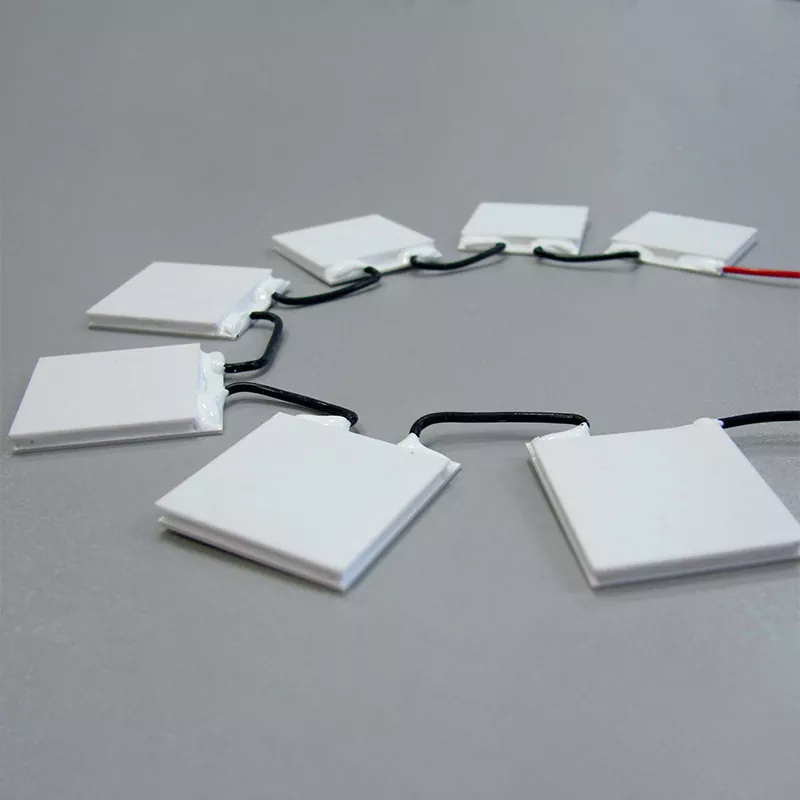
In a series configuration, multiple TE coolers are connected in series to form a continuous cooling circuit.
1. Because the fluid passes through each cooler in sequence, flow distribution is even, eliminating the problem of biased flow caused by uneven flow distribution.
2. In a series system, the fluid channels are relatively concentrated, resulting in higher flow velocities, enhancing convective heat transfer and improving the overall heat transfer coefficient.
3. The need to pass through multiple coolers in sequence creates a long flow path and high resistance, resulting in a high overall system pressure drop.
4. Using a series configuration in high-flow systems may be limited by excessive pressure drop and high energy consumption.
The parallel configuration is an ideal choice for high-flow and large-scale heat dissipation requirements, and is widely used in industrial cooling and heavy machinery.
1. The parallel configuration is ideal for applications with high flow rates, such as industrial cooling systems and heat dissipation for large machinery.
2. Each cooler handles only a portion of the flow, shortening the flow path and reducing the overall system pressure drop. This helps reduce pumping energy consumption, reduces the burden on the power system, and improves operating efficiency.
3. The number of coolers can be adjusted based on actual needs, facilitating system expansion and maintenance. Users can flexibly add or reduce the number of coolers based on load changes, achieving on-demand configuration.
You can take a look at what's the differences bwtween the tow connections with our General TE Coolers with Serial or Parallel for Special App.
|
Feature |
Series Configuration |
Parallel Configuration |
|
Flow Control |
Strong flow control, uniform flow distribution |
Weak, requires optimized flow control |
|
Heat Transfer Efficiency |
High heat transfer efficiency, high flow rate, high heat transfer coefficient |
Depends on flow distribution |
|
Pressure Drop |
High pressure drop, high energy consumption |
Low pressure drop, low energy consumption |
|
Flow Rate |
Small flow rate, suitable for high heat flux and low flow applications |
Large flow rate, suitable for high flow systems |
|
Structural Flexibility |
Poor structural flexibility, limited scalability |
High, easy to expand and maintain |
As a pioneer in the thermal power industry, our strength stems from the ultimate pursuit of every technical detail:
We have a profound research foundation in the field of thermoelectric-related disciplines. We integrate seasoned industry experience into every product design to ensure the maturity of the technical solutions.
Equipped with a leading automated testing platform in the thermoelectric industry, it can quickly, economically and extremely accurately calibrate the performance of all thermoelectric modules, ensuring zero error in the factory parameters.
Leveraging a vast inventory of raw materials, advanced processing equipment, and a global supply chain network, we are capable of flexibly adapting to the transition from single-piece prototype production to mass production of tens of thousands of units.
Our engineering team not only provides hardware, but also participates in the design of the flow path at the customer's system end. They optimize the system pressure drop and heat exchange balance through a combination of series and parallel schemes.
A: The series configuration has fast heat exchange but large pressure drop; the parallel configuration has a small pressure drop but requires attention to flow distribution. X-Meritan suggests adopting a "mixed series-parallel structure", by grouping in parallel and then series within the group, to maintain a high heat exchange coefficient while keeping the system energy consumption within a reasonable range.
A: The stability of the system depends on the weakest link. We use specialized testing equipment to conduct consistency screening on series-parallel thermocouple modules, ensuring that the resistance and thermal performance of each module match, and preventing local overheating failure due to uneven load distribution.